How to Take Care of Your Heart Using Home Remedies: Simple Tips for a Healthy Heart
Introduction
The heart is one of the most important organs in the human body. It pumps blood throughout the body, supplying oxygen and essential nutrients to every cell. Keeping your heart healthy is important for maintaining overall well-being and reducing the risk of heart disease.
While there is no home remedy that can cure heart disease or replace medical treatment, simple lifestyle habits and nutritious foods can support heart health. From eating a balanced diet to staying physically active, small changes at home can make a meaningful difference.
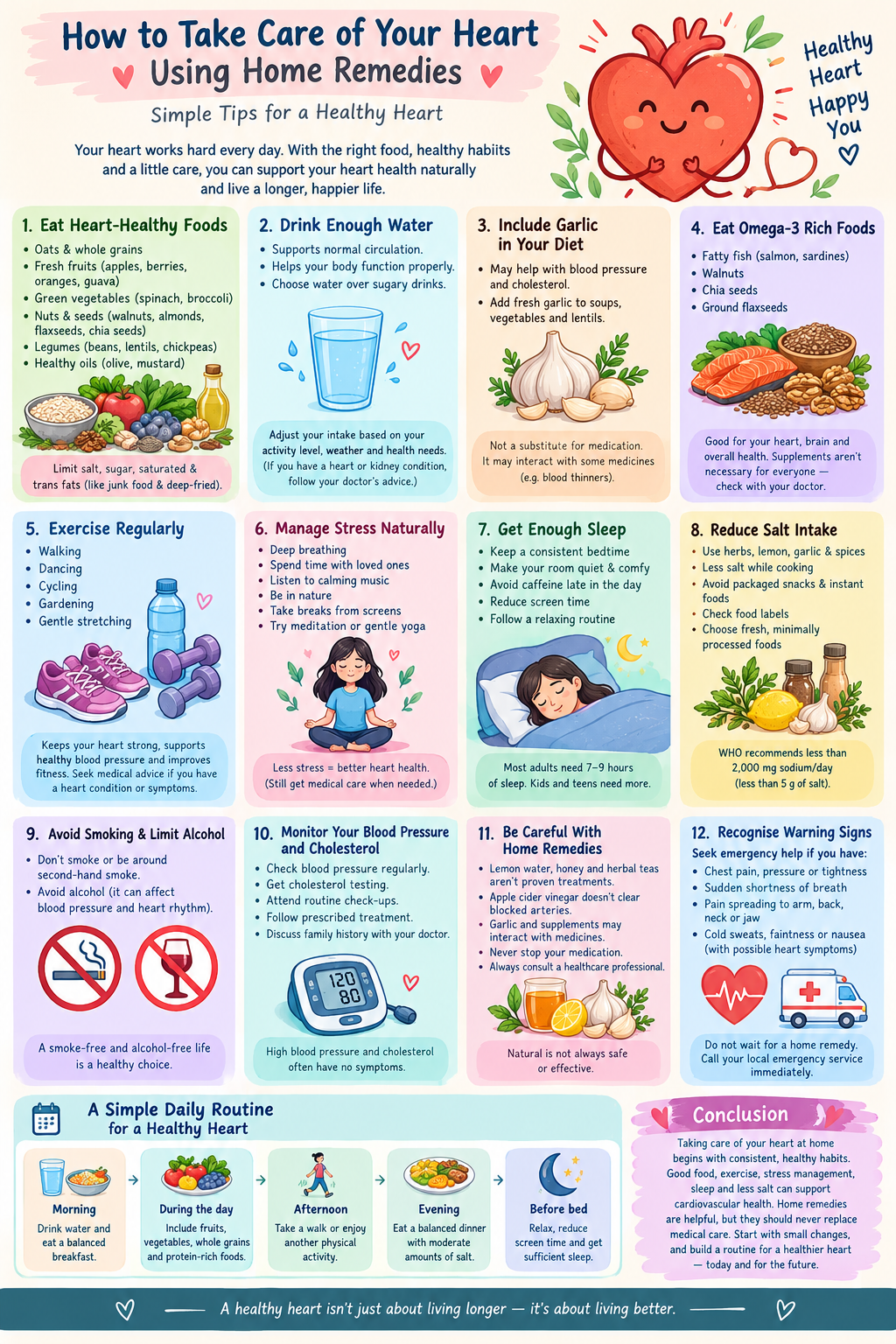
1. Eat Heart-Healthy Foods
A balanced diet is one of the best ways to support your heart. Choose foods rich in fibre, vitamins, minerals, and healthy fats.
Foods that support heart health include:
- Oats and whole grains: Provide fibre that can help manage cholesterol levels.
- Fresh fruits: Apples, oranges, berries, and guavas provide vitamins, minerals, and fibre.
- Green vegetables: Spinach, broccoli, and other vegetables provide essential nutrients.
- Nuts and seeds: Walnuts, almonds, flaxseeds, and chia seeds provide healthy fats.
- Legumes: Beans, lentils, and chickpeas are nutritious sources of fibre and plant-based protein.
- Healthy oils: Olive, mustard, and other unsaturated-fat-rich oils can be used in moderation.
Try to limit foods high in salt, added sugar, and saturated or trans fats, including heavily processed snacks and deep-fried foods.
2. Drink Enough Water
Staying hydrated supports normal circulation and helps your body function properly. Drink water regularly throughout the day, adjusting your intake to your activity level, weather, and health needs.
Water is a healthy everyday choice compared with sugary drinks. However, people with certain heart or kidney conditions may need to follow specific fluid limits recommended by their healthcare professional.
3. Include Garlic in Your Diet
Garlic is commonly used in traditional home remedies and contains compounds that have been studied for their potential effects on blood pressure and cholesterol.
You can include fresh garlic in soups, vegetables, lentils, and other everyday meals. However, garlic is not a substitute for prescribed medication, and evidence for garlic supplements is limited. Concentrated supplements can also interact with certain medicines, particularly blood thinners.
4. Eat Foods Rich in Omega-3 Fatty Acids
Omega-3 fatty acids support normal body functions and can contribute to a heart-healthy diet.
Good food sources include:
- Fatty fish, such as salmon and sardines.
- Walnuts.
- Chia seeds.
- Ground flaxseeds.
If you do not eat fish, plant-based sources such as walnuts and flaxseeds are useful options. Supplements are not necessary for everyone, so discuss them with a healthcare professional before starting them.
5. Exercise Regularly
Physical activity helps strengthen the cardiovascular system, supports healthy blood pressure, and improves overall fitness.
Simple activities you can do at home or outdoors include:
- Walking at a comfortable pace.
- Dancing to your favourite music.
- Cycling.
- Gardening.
- Doing gentle stretching exercises.
Aim for regular physical activity that suits your age, fitness level, and health condition. If you have an existing heart condition or experience symptoms during exercise, seek medical guidance about safe activities.
6. Manage Stress Naturally
Long-term stress can affect sleep, blood pressure, and other factors associated with heart health. Developing relaxing habits may help you manage daily stress.
Try these simple techniques:
- Practise slow, comfortable breathing.
- Spend time with family and friends.
- Listen to calming music.
- Spend time in nature.
- Take short breaks from screens.
- Practise meditation or gentle yoga if appropriate.
Stress management is beneficial for overall well-being, but it should complement—not replace—medical care when needed.
7. Get Enough Sleep
Good-quality sleep supports healthy blood pressure, metabolism, and cardiovascular function.
To improve your sleep habits:
- Maintain a consistent bedtime.
- Keep your bedroom quiet and comfortable.
- Avoid caffeine late in the day.
- Reduce screen use before bedtime.
- Follow a relaxing evening routine.
Most adults need around seven to nine hours of sleep each night, while children and teenagers generally need more.
8. Reduce Salt Intake
Eating too much sodium can contribute to high blood pressure, which increases the risk of heart disease and stroke.
Simple ways to reduce salt at home include:
- Use herbs, lemon, garlic, and spices for flavour.
- Reduce the amount of salt added during cooking.
- Limit packaged snacks and instant foods.
- Check food labels for sodium content.
- Choose fresh, minimally processed foods more often.
For many adults, the World Health Organization recommends consuming less than 2,000 mg of sodium per day, equivalent to less than 5 grams of salt from all sources.
9. Avoid Smoking and Limit Alcohol
Smoking damages blood vessels and increases the risk of heart disease. Avoid smoking and exposure to second-hand smoke.
Alcohol can also affect blood pressure and heart rhythm. Avoiding alcohol is a healthy choice, and it should never be started for supposed heart benefits.
10. Monitor Your Blood Pressure and Cholesterol
High blood pressure and elevated cholesterol may not cause noticeable symptoms, so regular health checks are important.
Helpful steps include:
- Check your blood pressure as recommended.
- Get cholesterol testing when appropriate.
- Attend routine medical check-ups.
- Follow prescribed treatment.
- Discuss your family history of heart disease with your healthcare professional.
Home monitoring can provide useful information, but it does not replace professional evaluation.
11. Be Careful With Traditional Home Remedies
Natural ingredients can be part of a healthy diet, but natural does not always mean safe or effective.
Keep these precautions in mind:
- Lemon water, honey, and herbal teas are not proven treatments for heart disease.
- Apple cider vinegar does not reliably prevent heart attacks or clear blocked arteries.
- Garlic and other supplements may interact with medicines.
- Never stop blood pressure, cholesterol, or heart medication in favour of a home remedy.
- Consult a healthcare professional before using supplements to treat a medical condition.
The safest approach is to combine a nutritious diet with regular exercise, adequate sleep, and appropriate medical care.
12. Recognise Warning Signs of a Heart Problem
Heart problems can sometimes develop without obvious symptoms, but certain warning signs require urgent attention.
Seek emergency medical help if you or someone else experiences:
- Chest pain, pressure, or tightness.
- Sudden shortness of breath.
- Pain or discomfort spreading to the arm, back, neck, or jaw.
- Cold sweats, faintness, or sudden unexplained nausea alongside possible heart symptoms.
Do not wait for a home remedy to work. Call your local emergency service immediately if a heart attack is suspected.
A Simple Daily Routine for a Healthy Heart
Here is an easy routine to help build heart-friendly habits:
| Time | Healthy habit |
|---|---|
| Morning | Drink water and eat a balanced breakfast. |
| During the day | Include fruits, vegetables, whole grains, and protein-rich foods. |
| Afternoon | Take a walk or enjoy another suitable physical activity. |
| Evening | Eat a balanced dinner with moderate amounts of salt. |
| Before bed | Relax, reduce screen time, and get sufficient sleep. |
Adapt this routine to your age, schedule, and medical needs.
Conclusion
Taking care of your heart at home begins with consistent, healthy habits. Eating nutritious foods, drinking enough water, exercising regularly, managing stress, getting adequate sleep, and reducing excess salt can all support cardiovascular health.
Home remedies should be viewed as supportive lifestyle practices rather than cures. Regular health check-ups and following professional medical advice are equally important.
Remember: You do not need to change everything overnight. Start with small, sustainable habits and build a routine that supports a healthier heart for years to come.